Seeing the City Through Different Lenses: Whose City Are We Designing?
A city can be many things at once.
It can be a place to work, a place to raise children, a place to meet friends, a place to exercise, a place to escape to, or simply somewhere to pass through on the way somewhere else. The same street that feels welcoming to one person can feel intimidating to another. A square that is lively and exciting for a group of teenagers might feel noisy and uncomfortable to an older resident. A park that looks beautiful on a planning drawing might be the most difficult place in the neighbourhood for someone with limited mobility.
We often talk about “the city” as though it is a single experience. But there is no single city.
There are as many versions of a city as there are people who use it.
The city we use is not necessarily the city we see
When we move through a city every day, we develop our own mental map. We know where to cross the road, where the shortcut is, which café has somewhere to sit, which bus stop feels safe at night, where we can find a public toilet, and which streets are pleasant to walk along.
These small details shape our relationship with a place.
But our experience can also make us blind to the experiences of others.
Someone who drives everywhere may see a road primarily as a route from A to B. A pedestrian may see the same road as a barrier. A cyclist may experience it as a place of risk. A parent with a pushchair may see the kerb, crossing and pavement width before noticing anything else.
A teenager might see an empty piece of land as a potential place to meet friends. A developer might see an opportunity for construction. A landscape architect might see a future park. A nearby resident might see the last remaining open view.
None of these perspectives is necessarily wrong.
They are simply different lenses.
Age changes the city
The city experienced by a ten-year-old is not the same city experienced by a forty-year-old.
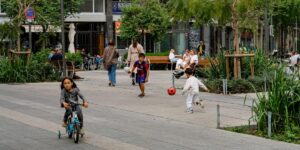
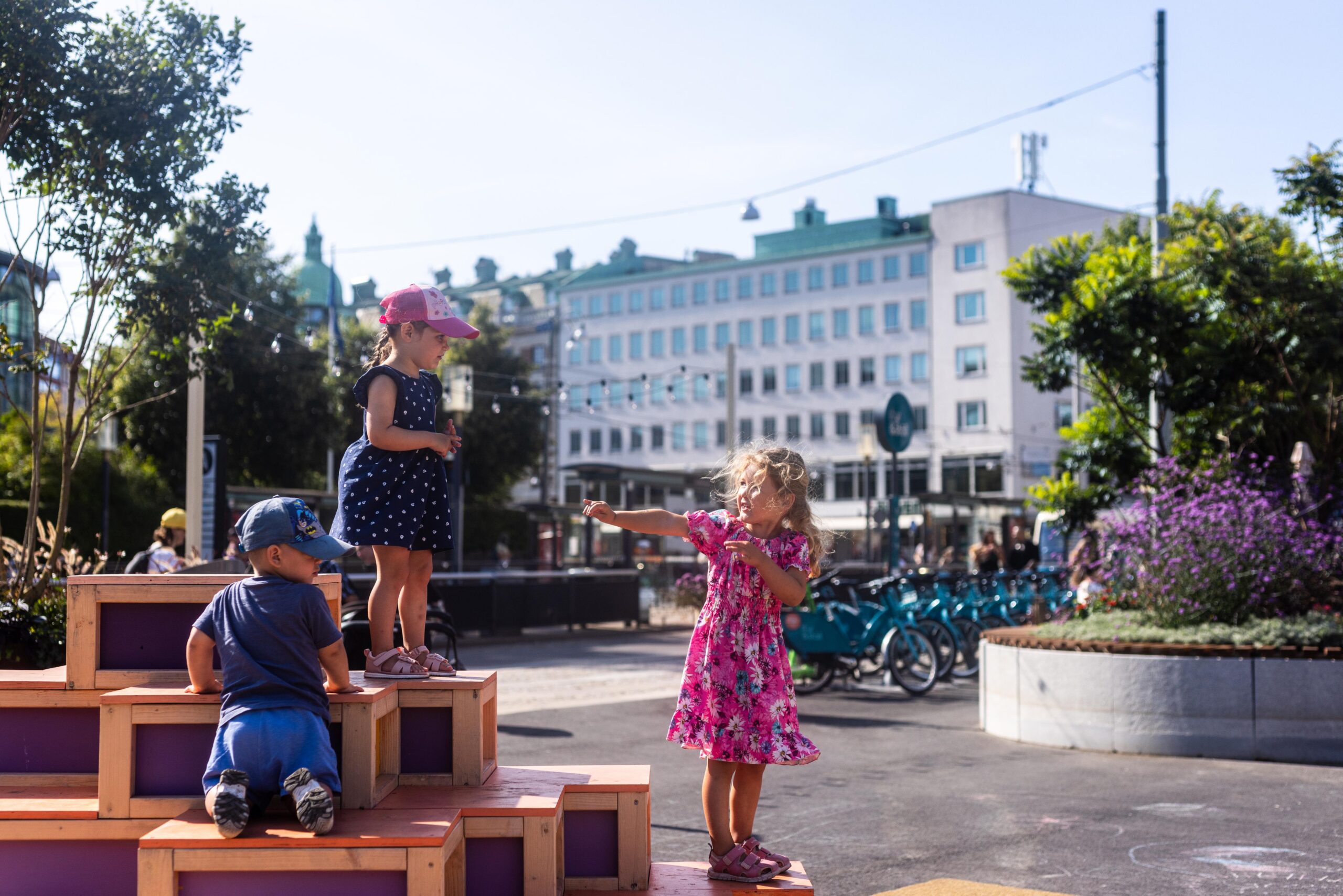
For children, independence can depend on whether they can safely walk or cycle to school, reach a playground, meet friends, or explore their neighbourhood without an adult. For young people, public space can be one of the few places where they can spend time without having to buy something.
For working-age adults, convenience often matters. How long does it take to get to work? Can I access shops and services? Can I find childcare? Can I get home easily?
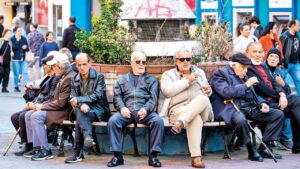
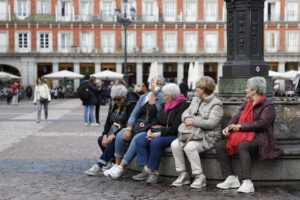
For older people, completely different questions may become more important. Are there places to sit? Are crossings long enough? Is public transport accessible? Can I reach a doctor, shop or community centre without having to travel too far?
The city has not changed.
The person has.
And therefore the experience has.
Gender, safety and invisible boundaries
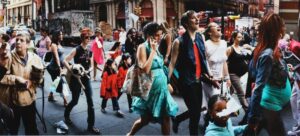
Two people can walk down exactly the same street and experience completely different levels of comfort.
Lighting, visibility, activity, isolation, transport connections and the presence of other people all influence how safe a place feels. What may appear to be a perfectly functional public space from a technical perspective can feel very different when experienced alone after dark.
This is why simply asking whether a space is “safe” can be misleading.
Safe for whom?
At what time?
Doing what?
With whom?
A city designed around a single assumed user risks overlooking the subtle ways that different people navigate public space.
The city through the lens of disability
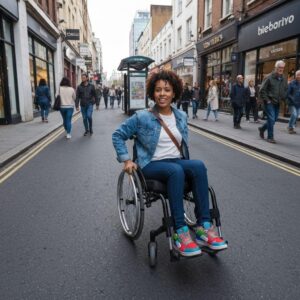
Accessibility is another reminder that design is experienced through the body.
Steps, narrow pavements, uneven surfaces, poorly positioned street furniture, inaccessible public transport or a lack of places to rest can fundamentally determine whether someone can participate in city life.
And accessibility is not only about people who identify as disabled. A person carrying shopping, travelling with a suitcase, recovering from an injury, accompanying a small child or simply getting older can encounter many of the same barriers.
Designing for a wider range of bodies and abilities does not create a “special” city for some people.
It creates a better city for everyone.
We don’t all want the same thing
One of the most interesting challenges in city-making is that different groups can have genuinely different — and sometimes conflicting — desires.
One person wants more nightlife.
Another wants less noise.
One wants more parking.
Another wants fewer cars.
One wants more development.
Another wants to protect the character of the neighbourhood.
One wants somewhere to sit quietly.
Another wants somewhere to play music with friends.
Good city-making cannot simply eliminate these differences.
Instead, it needs to create enough variety, flexibility and choice for different needs to coexist.
This is where the idea of a “multi-use” city becomes important. A successful public space does not necessarily need to perform one function. A square can host a market in the morning, provide somewhere to sit at lunchtime, become a meeting place after school and accommodate an event at the weekend.
The same space can mean different things to different people — and that can be a strength.
Who gets to shape the city?
There is another lens we need to consider: power.
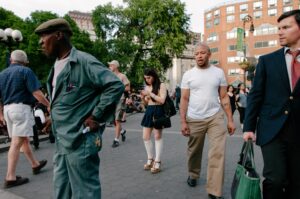
Cities are not shaped only by the people who live in them. They are shaped by planners, politicians, developers, businesses, investors, transport authorities, landowners and institutions.
Each has its own priorities.
The challenge is not to pretend that these interests do not exist. It is to make sure that the people who actually use places have meaningful opportunities to influence how those places change.
Participation should therefore be more than asking residents whether they “like” a proposed design.
We need to understand how people use a place now.
Where do they go?
Where do they avoid?
What do they value?
What is missing?
What changes throughout the day, week and year?
And perhaps most importantly: who isn’t currently being heard?
Designing for the city we don’t yet see
The most interesting cities are not necessarily those with the most spectacular architecture.
They are often the ones where many different lives can happen.
A city should allow for movement and stillness, activity and quiet, work and leisure, independence and care. It should provide spaces for people who have money to spend and spaces for people who don’t. It should work for residents as well as visitors, for children as well as adults, for people who move quickly and people who need to move slowly.
Seeing the city through different lenses changes the questions we ask.
Instead of asking, “Does this space work?”
We might ask:
Who does it work for?
Instead of asking, “What does the city need?”
We might ask:
Whose needs are we talking about?
And instead of designing for an imaginary average citizen, we can begin designing for the wonderfully complicated reality of human life.
There is no single city.
There are many cities layered on top of one another — experienced differently, at different times, by different people.
The task of good urbanism is not to choose one lens.
It is to learn how to look through many.