Changing a city doesn’t always begin with a major investment or an ambitious redevelopment plan. Sometimes, it starts with a few people asking one simple question: What could we improve together?
Cities are constantly changing.
Buildings appear, neighbourhoods evolve, public spaces are redesigned and communities develop new ways of living together.
But urban transformation isn’t only the responsibility of architects, planners or local authorities.
Residents, educators, young people and community organisations can also contribute to shaping the places where they live.
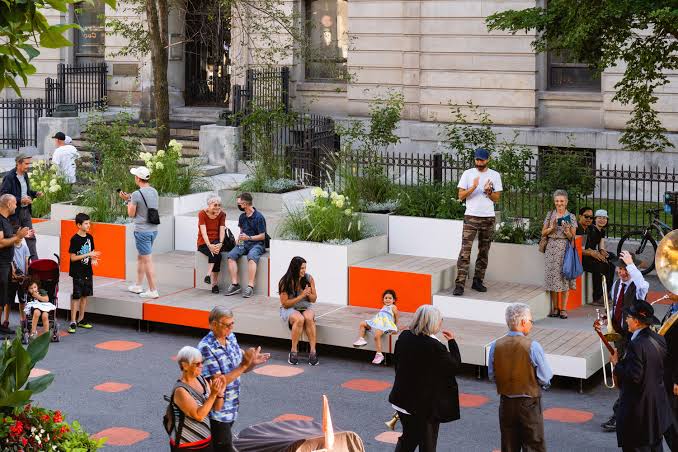
A neglected courtyard can become a place for meeting. An unused corner can inspire a community garden. A conversation about accessibility can lead to a campaign for more inclusive public spaces.
These changes may begin on a small scale, but they can have a meaningful influence on how people experience their neighbourhoods.
At Concrete Jungle, we believe cities are not finished systems. They are shared environments that we can explore, question and help improve.
Why Small Actions Matter
When young people are asked to imagine changing their city, they often think of large projects.
More parks. Better public transport. Safer streets. Cleaner neighbourhoods.
These ambitions matter, but big changes can sometimes feel beyond an individual’s influence.
Starting with smaller actions can help participants understand that community participation is possible.
A group might identify a local problem, investigate its causes, speak with residents and develop a realistic proposal.
Even when the outcome isn’t immediate, participants can learn how public decisions are made and how communities can work together.
The value lies not only in the final result but in the process of participation.
1. Begin by Listening to the Neighbourhood
Before trying to improve a place, we need to understand it.
What do people value about their neighbourhood? Which spaces feel welcoming? What challenges do residents encounter?
An urban exploration activity can be a useful starting point.
Invite participants to walk through a familiar area and document their observations.
They might examine:
- Places where people meet and socialise.
- Areas with limited shade or greenery.
- Accessibility barriers.
- Spaces that appear neglected.
- Opportunities for recreation and learning.
- Existing community initiatives.
Encourage participants to distinguish between their own observations and assumptions about other people’s experiences.
Where appropriate, they can invite residents to share perspectives voluntarily, without collecting unnecessary personal information.
The aim is to understand the place before proposing solutions.
2. Discover the Power of Community Gardens
Community gardens provide one example of how shared action can transform urban environments.
They can bring together people interested in growing food, improving biodiversity, learning about sustainability or simply spending time outdoors.
For educators, gardens offer opportunities to explore cooperation, environmental responsibility and relationships between people and nature.
Participants can investigate how a community garden works and what is required to maintain one.
Who owns or manages the land? How are decisions made? Who can participate? How are tools and responsibilities shared?
Creating a garden requires suitable permissions, ongoing care and attention to soil safety, accessibility and water availability.
Even when establishing a garden isn’t possible, visiting or studying an existing one can offer valuable lessons about community organisation.
3. Reimagine Neglected Spaces
Most cities contain places that seem to have been forgotten.
An unused square, an empty courtyard or an underused pedestrian area may appear to offer little value.
But what possibilities could these spaces hold?
Invite young people to choose a location and imagine how it could better serve their community.
They could create drawings, models or digital proposals featuring seating, greenery, creative activities, safer routes or accessible facilities.
Encourage them to consider several questions:
Who would use this space?
A successful proposal should consider different ages, abilities and interests.
What already works here?
Improvement doesn’t always mean replacing everything.
Who makes decisions about this space?
Understanding ownership and responsibility is essential.
How could the idea be maintained?
A welcoming space requires long-term care, not just an attractive design.
This activity can introduce participants to urban planning, public participation and environmental justice.
4. Make Walking and Accessibility Part of the Conversation
Sometimes, improving public space begins by recognising barriers that are easy to overlook.
A damaged pavement, missing crossing or lack of seating can affect whether people feel able to move comfortably through a neighbourhood.
Invite participants to evaluate a short urban route, considering accessibility and ease of use.
They might observe pavement conditions, crossing points, public transport connections, lighting and places to rest.
Encourage them to think about different mobility needs without pretending to know exactly how another person experiences the environment.
Where possible, include people with relevant lived experience in the discussion.
Participants can then prepare a short report or visual map showing potential improvements.
This can help them understand that inclusive urban design is not an optional extra. It shapes who can participate in city life.
5. Use Creativity to Bring People Together
Community action isn’t limited to physical improvements.
Art, photography, storytelling and cultural activities can also help people connect with their surroundings.
A neighbourhood photo exhibition might explore what residents value about a place.
A storytelling walk could collect voluntary accounts of local history.
A temporary art project could encourage conversations about belonging, provided organisers have the necessary permissions.
These approaches can create opportunities for different generations and communities to share perspectives.
For young people, creative projects can be especially useful because they offer different ways to express ideas and participate.
6. Turn Ideas Into Realistic Action Plans
Once participants have identified an issue, the next challenge is deciding what to do.
An action plan doesn’t need to be complicated.
Start with five questions:
What do we want to improve?
Describe the issue clearly.
Why does it matter?
Explain who is affected and how.
Who should be involved?
Identify residents, organisations, property owners or local authorities who could contribute.
What resources and permissions do we need?
Consider time, materials, accessibility, safety and maintenance.
What is our first achievable step?
Choose something realistic, such as gathering feedback, presenting a proposal or contacting a local organisation.
This approach helps participants move from imagination towards responsible community participation.
7. Recognise That Change Takes Time
Not every community initiative succeeds immediately.
A proposal might face funding limitations, administrative requirements or disagreements between different groups.
These challenges are part of the learning process.
Participants can discover that urban change involves negotiation, patience and listening.
They may also learn that people have different ideas about what makes a neighbourhood better.
A public square designed for lively events might create concerns for residents seeking quieter surroundings.
A new green area may be welcomed by some people while others worry about maintenance or access.
Good community participation takes these differences seriously.
What Young People Can Learn Through Community Action
Small urban initiatives can support learning across several areas:
- Civic participation: Understanding how people influence local decisions.
- Communication: Presenting ideas and listening to different perspectives.
- Cooperation: Working with others towards shared goals.
- Environmental awareness: Recognising relationships between urban design and sustainability.
- Problem-solving: Developing realistic responses to challenges.
- Empathy: Considering how public spaces affect different communities.
The aim isn’t to expect young people to solve complex structural problems on their own.
Instead, it’s to help them recognise that their voices, observations and ideas have value.
The City Belongs to Its Communities
A city is more than its buildings, roads and infrastructure.
It is shaped by the relationships between people and the places they share.
Community action reminds us that urban spaces can be discussed, questioned and improved.
Sometimes, that begins with a creative workshop.
Sometimes, with a conversation between neighbours.
And sometimes, with a group of young people who decide to look at a familiar street differently.
Small actions may not transform an entire city overnight, but they can help people imagine, organise and participate in meaningful change.
That is where the journey from concrete to community begins.
Explore More With Concrete Jungle
Discover educational activities that encourage cooperation, civic participation and creative thinking about urban spaces in the Concrete Jungle Toolkit.