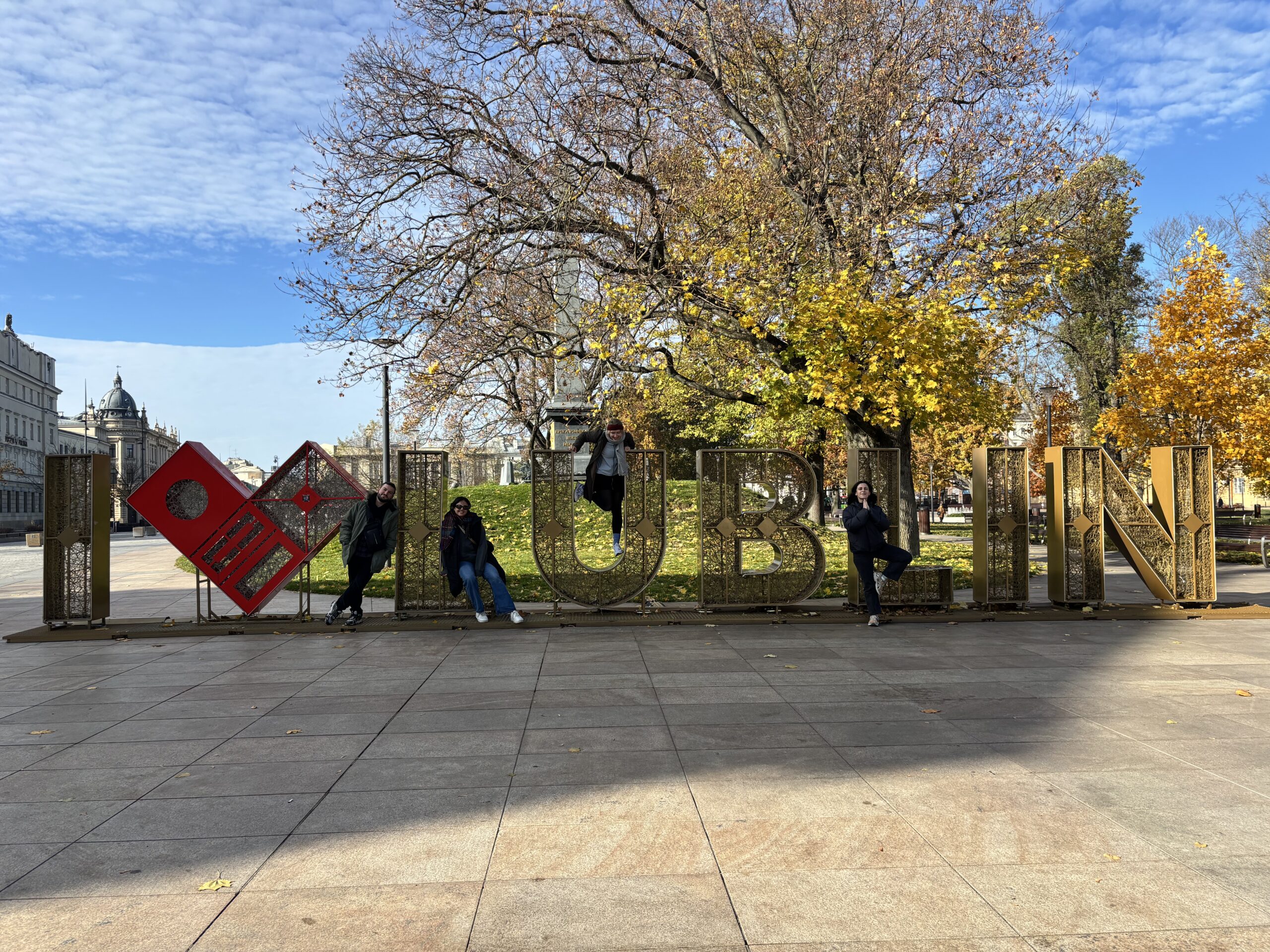
EDV 2 in Lublin marked the next step in the Concrete Jungle project’s exploration and development phase, deepening our focus on how cities educate through stories, spaces, and participation. Building on the foundations laid during EDV 1, this visit invited us to look more closely at how history, mythology, and civic structures influence the way people relate to urban environments — and how these elements can be transformed into meaningful educational tools for youth work and civic education.
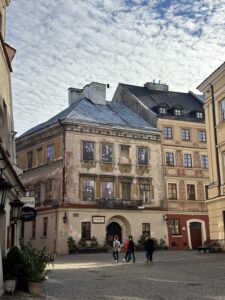
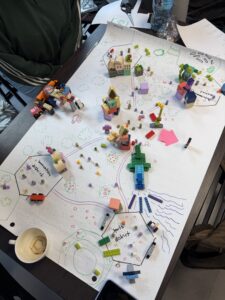
A central theme of EDV 2 was learning through narrative. As we moved through Lublin, we encountered myths, legends, and historical anecdotes that revealed how cities build identity and collective memory. Stories of Slavic gods, symbolic animals, miraculous events, and moments of injustice were not treated as distant folklore, but as living material for reflection. Through interactive methods — such as designing historical buildings, imagining ideal cities, or translating impressions into sound — we explored how storytelling can foster curiosity, critical thinking, and emotional connection to place. These activities helped us understand how narratives shape belonging and how they can be adapted into engaging, participatory learning experiences.
Equally important was our focus on civic participation and youth-friendly urban structures. During our visit to Lublin’s Urban Lab, we examined concrete examples of how municipalities can create spaces for gathering, learning, and leisure — and how political systems can actively support young people’s involvement in public life. This encounter grounded our reflections in real practice, showing that civic education is not abstract, but deeply connected to accessibility, trust, and cooperation between institutions and communities. It also challenged us to think critically about how cities can move beyond symbolic participation and toward genuine inclusion.
As with every Exploration and Development Visit, reflection and analysis were essential. Throughout EDV 2, we continuously evaluated the methods we experienced — discussing their strengths, limitations, and potential adaptations. We worked from multiple perspectives: as participants engaging emotionally and creatively, as facilitators considering group dynamics and learning outcomes, and as method designers thinking about transferability and accessibility. This process allowed us not only to improve existing tools, but also to begin shaping new ones that respond to urban realities and the needs of educators and youth workers. By the end of EDV 2, we felt inspired, connected, and more confident in our shared direction. Lublin offered us a powerful reminder that cities are not only built from concrete and policy, but also from stories, memories, and human interaction. The insights and methods developed during this visit will now feed into the ongoing creation of the Concrete Jungle toolkit — ensuring that the learning from EDV 2 continues well beyond the streets where it began.